


University of North Texas Health Science Center President Resigned After Report Revealed Unclaimed Bodies Were Being Sold or Used as Cadavers Without Consent

FORT WORTH, TEXAS (January 21, 2025) – The UNT Science Center and its president have come under scrutiny after an investigation showed that unclaimed bodies were used and sold without consent.
Following an NBC News investigation, Sylvia Trent-Adams has resigned from her position as president of the University of North Texas Health Science Center. The unclaimed bodies were being used as cadavers and sold to researchers without the permission of the deceased or their next of kin.
The investigation revealed that this ghoulish practice went on for several years. It resulted in the disposition of hundreds of bodies over that period since 2019.
Many of the bodies belonged to military veterans. The UNT Science Center gained access to an estimated 2,350 unidentified bodies through Dallas and Tarrant counties.
Roughly 830 bodies were used in medical research or dismembered and sold to medical schools. The center also liquified many of the bodies through water cremation. This practice is not legal in the state of Texas.
This all allegedly took place while family members had no idea what happened to their love one’s remains. A full investigation into all of the allegations against the UNT Science Center remains ongoing.
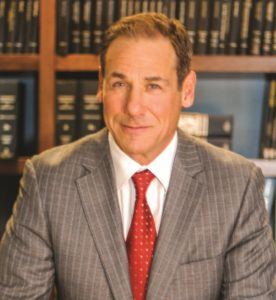
Avi Laby is a personal injury attorney at Gersowitz Libo & Korek.
He is representing the family of a 69-year-old woman whose organs were illegally harvested after she died at Bellevue Hospital. She was initially hit by an L Train before being brought to the hospital and declared brain dead.
Laby told Eyewitness News, “The family deserves justice. They deserve to know what happened, why did it happen.” Her family is pursuing a lawsuit against New York City Health and Hospitals (NYCHHC).
Liability for Illegal Organ Harvesting and Body Desecration
All people have a legal right to decide what happens to their body after they die. If a person doesn’t have advanced wishes, these choices will typically fall to their next of kin. In legal terms, this is commonly referred to as the right of sepulcher. Despite this, a huge number of violations occur every year. Much of the misconduct involves illegal organ harvesting. According to The Exodus Road, illegal organ harvesting generates roughly $1.7 billion every year. There are a number of steps that hospitals, counties, schools, and mortuaries should take to prevent misconduct with the deceased.
- Institutions should maintain detailed records for all unclaimed bodies, including any cause of death.
- Institutions should require multiple levels of authorization for the handling and release of all unclaimed bodies in their possession.
- Institutions should restrict access to unclaimed bodies to only necessary staff members.
- Institutions should require an independent oversight board to review cases involving any unclaimed bodies.
- Institutions should train all of their staff members to report any potentially suspicious activity.
- Institutions should ensure compliance with all local laws and ethical standards, especially when bodies are being donated for medical research.
It is ultimately family members – not the state or institutions like the UNT Science Center – that are able to decide what happens with the remains of their loved ones. Texas Health and Safety Code, Section 711.002 outlines the priority of individuals who were able to make decisions for the remains of a body. If a public or private institution infringes on a family’s right of sepulcher, this could form the basis of a civil claim. Affected family members are able to pursue damages for emotional distress and mental anguish brought by the desecration of their loved one’s remains. There are also numerous laws prohibiting the illegal disposition of a corpse.
Pursuant to Texas Penal Code § 42.08, it is a crime to, without legal authority, knowingly: “(1) disinters, disturbs, damages, dissects, in whole or in part, carries away, or treats in an offensive manner a human corpse; (2) conceals a human corpse knowing it to be illegally disinterred; (3) sells or buys a human corpse or in any way traffics in a human corpse.” These incidents can be particularly traumatic for families that have cultural or religious preferences for the burial of their loved one. It is important that certain steps are taken after any suspected violation of a family’s right of sepulcher.
- Family members should request a full account of what happened.
- If possible, family members should regain possession of their loved one’s remains.
- A thorough investigation should be conducted in order to determine how this violation took place.
- Family members should file a complaint with local authorities and state health departments.
- Family members should consult with an experienced personal injury attorney.
It can be hard to know where to begin if your loved one’s body has been desecrated by a hospital or other institution. In many cases, families are already grieving because they’re unsure about the fate of their loved ones. These incidents add insult to injury. Sadly, though, the institutions that commit these types of violations will virtually never accept responsibility for what took place. They may blame outside agencies or other organizations that accepted the bodies. It is important for family members to understand that they do have legal options. They are able to hold all responsible parties accountable through a civil claim.
Investigating Body Desecration at the UNT Science Center
We at Gersowitz Libo & Korek, P.C. were deeply concerned to hear about the ghastly ethics violations and body desecration reported at the UNT Science Center. There needs to be a thorough investigation into this center and all of the institutions that were accepting these bodies as well. This was an unconscionable set of abuses that took place over many years. It is our sincere hope that measures are taken to prevent this from happening ever again.
Has your loved one’s remains been improperly sold, mistreated, or disposed of by the University of North Texas Health Science Center? You may have legal recourse. Our team of sepulcher rights attorneys is here to help. We care deeply that families are aware of their rights and that institutions are held accountable for their illegal conduct. Whether you just have legal questions or would like a risk-free consultation about your particular situation, we are here for you. You can reach out to us anytime at (516) 908-9792.